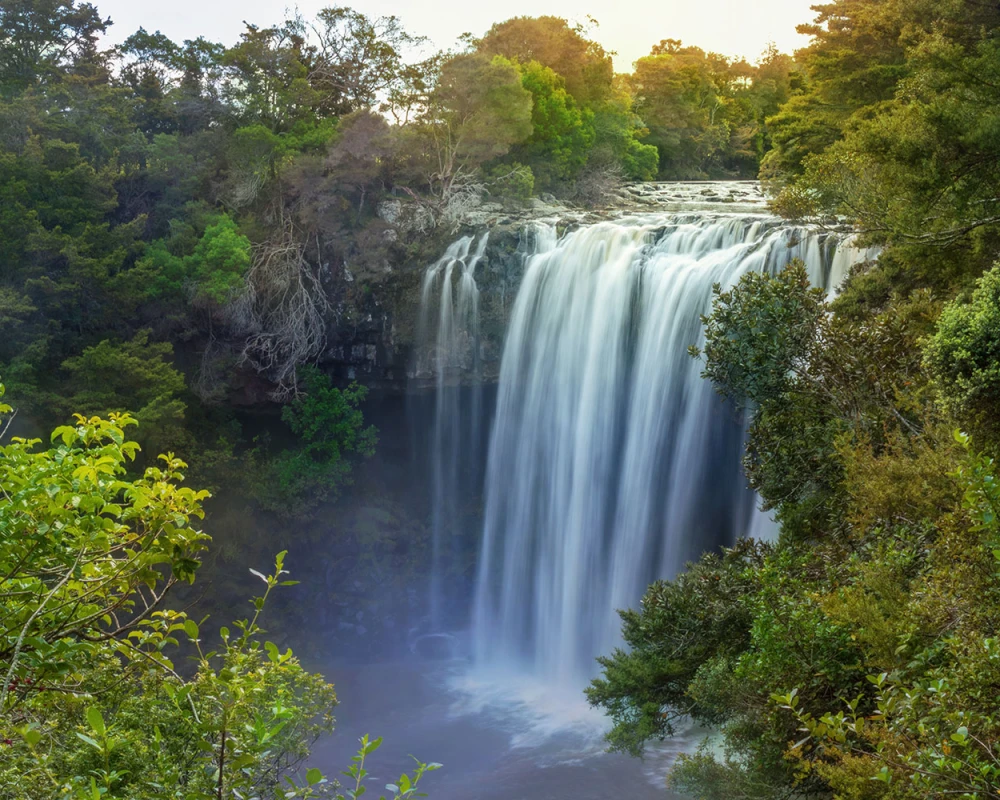
Rainbow Falls (Waianiwaniwa)
Posted by Golden Chain NZ on Jun 16, 2026, 2:35 AM


Why Rainbow Falls (Waianiwaniwa) Deserves a Spot on Your New Zealand Itinerary
The falls themselves are genuinely striking
Rainbow Falls sits on the Kerikeri River, and geologically it's a bit unusual. Most waterfalls in New Zealand form because soft rock erodes away — but here, the falls sit on a hard basalt ledge next to softer mudstone. Over time the mudstone wore away, leaving the basalt to hang on and create this dramatic single drop. The result is a clean, powerful plunge rather than a series of small cascades, which makes for a much more photogenic payoff.
The Māori name, Waianiwaniwa, translates to "rainbow waters" — and on a sunny afternoon when the mist catches the light just right, you'll understand exactly why.
It's an easy win, even if you're short on time
You don't need to be a serious hiker to see this one. The walk to the falls takes about 10 minutes from the car park, so it's an easy add-on even if you're just passing through Kerikeri for lunch or a coffee stop. There's a Department of Conservation viewing area right by the falls, which is where most of those postcard-perfect photos come from.
But it's also a great excuse for a longer walk
If you've got a bit more time, the falls track connects to the Kerikeri River Track — about 3.5 km one-way, roughly 1.5 hours of walking. It follows the north bank of the river through regenerating native bush, including young kauri and tōtara, and it's kiwi habitat, so keep your ears open (you're more likely to hear one than see one, but it's still a thrill).
The track ends at the Kerikeri Basin, home to some genuinely significant historic sites: the Stone Store and Mission House (among the oldest surviving buildings in New Zealand), St James Church, Rewa's Village, and the historic Kororipo Pā. So you get a solid nature walk and a dose of New Zealand history in one outing — waterfall at one end, colonial and Māori heritage at the other.
The bottom line
Rainbow Falls is one of those rare attractions that works whether you've got 15 minutes or half a day. Quick photo stop on the way through, or a proper river walk into Kerikeri's history — either way, it earns its place on the itinerary.