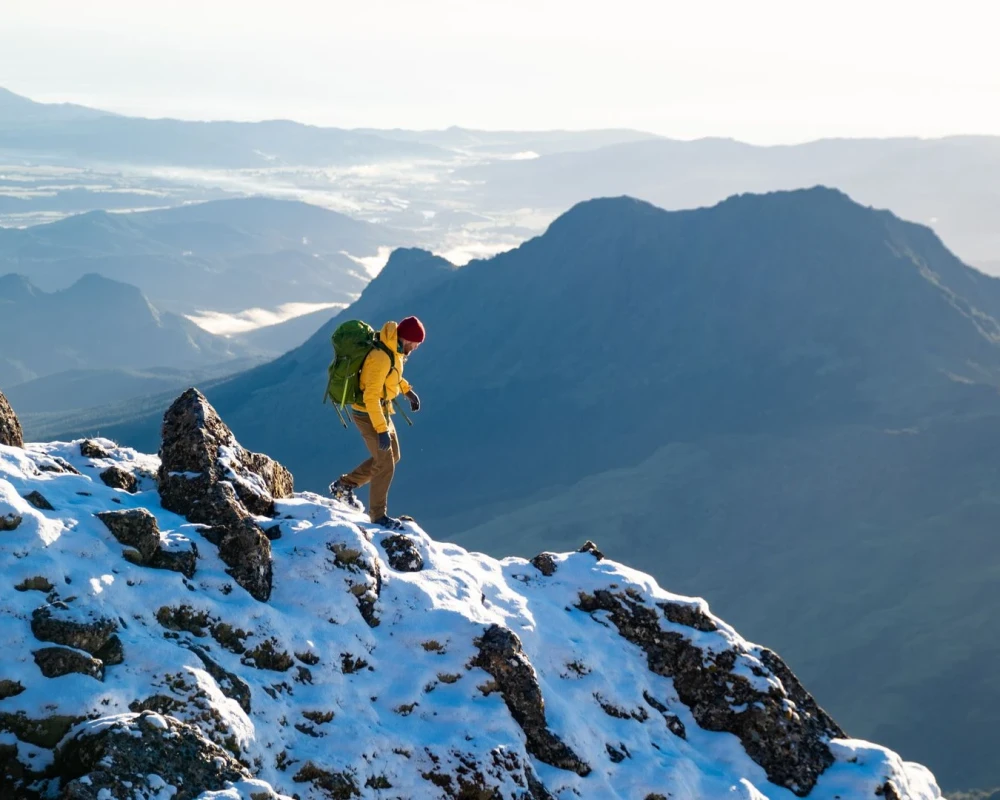
Mount Hikurangi - Gisborne
Posted by Golden Chain NZ on May 27, 2026, 3:41 AM


Why Mount Hikurangi Should Be On Your East Coast Itinerary
It's the North Island's tallest non-volcanic peak
At 1,752 metres, Hikurangi is the highest point on a spur of the Raukūmara Range, and unlike Taranaki or Ruapehu, it isn't a volcano — it's the North Island's tallest peak of purely non-volcanic origin. Nearby summits like Whanokao, Aorangi, Wharekia and Taitai form what Te Ara: The Encyclopedia of New Zealand calls an "awe-inspiring vista," so even before you reach the top, the surrounding ranges are doing a lot of the work.
It's the most significant mountain in Māori mythology on this coast
Hikurangi is the most important icon of Ngāti Porou, and its story goes right back to the creation of the North Island. According to tradition, it was the first part of the North Island to emerge when the demigod Māui hauled it up from the ocean as a giant fish. His waka, Nukutaimemeha, is said to have run aground on the mountain and now lies petrified near the summit.
The mountain also features in the story of Paikea, another Ngāti Porou ancestor, who survived an attempt on his life at sea and later rode to New Zealand on the back of a whale — with Hikurangi serving as a refuge when a great flood followed him here. These aren't obscure footnotes either; the mountain shows up constantly in Ngāti Porou's karakia, waiata, haka and proverbs, including their defining pēpeha: "Ko Hikurangi te maunga, Ko Waiapu te awa, Ko Ngāti Porou te iwi."
It's famous for greeting the sun first
Hikurangi has long held the reputation as the first place on mainland New Zealand to see the sunrise each day. It's technically only true during the Southern Hemisphere summer — and even then, spots like the Chatham Islands beat it — but that hasn't stopped it becoming a genuine point of national pride. When Ngāti Porou welcomed the new millennium in 2000, they held dawn ceremonies right on the summit, and nine large whakairo (carvings) depicting Māui and his family were installed on the mountain to mark the occasion. Those carvings, made under the guidance of master carver Derek Lardelli, are still there today and are one of the main reasons people make the trip.
The land itself tells a story of return
The mountain was taken by the Crown in the 1870s and turned into a state forest park. In November 1990, ownership was formally returned to Ngāti Porou, who now manage the mountain and facilitate public access to it. It's a good example of land returning to the people whose stories are woven into it — and it's also why visiting requires a bit more courtesy than your average hike.
Practical things to know before you go
- Contact Te Rūnanga o Ngāti Porou before arriving — the track crosses their private land, and access can be temporarily closed for cultural or farming reasons.
- There's no public vehicle or bike access past the car park, but 4x4 tours to see the carvings, plus summit and overnight guides, can all be arranged through Te Rūnanga o Ngāti Porou.
- It's a serious walk — around 7 hours to the summit from the car park, with a hut roughly 4–5 hours up for those staying overnight (bring your own cooker and water).
- Weather is unpredictable up there, so pack for everything, even if it looks clear at the base.
Worth knowing before you climb
The summit is the northernmost point in New Zealand where you'll find true alpine vegetation, including large buttercups and prickly wild Spaniards, plus the Hikurangi tutu — a small shrub found nowhere else on Earth. It's also a place with a quietly sad wildlife history: the last known mainland sighting of the North Island saddleback was here, back in 1910, before the species was later reintroduced elsewhere in the North Island.
The bottom line
Mount Hikurangi isn't a casual roadside stop — it's a genuine undertaking, both physically and culturally. But if you're after somewhere that connects you to New Zealand's oldest stories, rewards a proper walk, and quite possibly shows you the first sunrise on the mainland, it's hard to top.